Best overall: the physiological sigh. Best for a known trigger: box breathing. Best before sleep: 4-7-8 breathing. This EMDR with Kelli guide ranks the best breathing exercises for panic attacks in 2026 by ease of use, breath-hold demands, evidence, and fit for the situation.
- The physiological sigh is the best breathing exercise for panic attacks already building.
- Box breathing is best before a known trigger, but its holds can feel uncomfortable during panic.
- Diaphragmatic breathing is the strongest daily practice for reducing rapid, upper-chest breathing.
- Breathing exercises manage arousal; recurring panic tied to trauma, anxiety, or OCD requires a broader treatment plan.
Why this matters
Panic can produce rapid breathing, chest tightness, dizziness, tingling, and a feeling that you cannot get enough air. Taking repeated large breaths can intensify these sensations when overbreathing is already part of the problem.
The aim is not to pull in as much air as possible. It is to make the breath quieter, slower, and easier, usually with an exhale that lasts longer than the inhale. That change can interrupt overbreathing and give the nervous system a repeatable signal that the immediate threat has passed.
Breath work is a regulation skill, not a complete treatment for panic disorder, PTSD, complex trauma, anxiety, or OCD. In 2026, recurring attacks still require an individualized assessment rather than an assumption that every episode has the same cause. New chest pain, fainting, severe breathing difficulty, or symptoms that differ from your usual panic pattern require medical evaluation.
What makes a breathing exercise useful during panic
- Simple instructions: Panic reduces working memory, so the pattern must be easy to recall.
- A gentle inhale: Large, forced inhales can worsen lightheadedness when you are already overbreathing.
- A longer exhale: A controlled exhale slows the overall breathing pace without demanding a huge breath.
- Limited breath holding: Holds work for some people but can increase air hunger for others.
- Situational fit: The best technique in bed is not always the best option at work or while driving.
- An honest evidence base: Research on general stress regulation does not automatically prove that a technique stops panic attacks.
Breathing exercises for panic attacks at a glance
| Rank | Exercise | Best for | Standout feature | Key limitation |
|---|---|---|---|---|
| 1 | Physiological sigh | Panic that is beginning to build | No counting or extended hold | Acute panic-specific evidence remains limited |
| 2 | Box breathing | Preparing for a known trigger | Memorable four-part pattern | Breath holds can increase air hunger |
| 3 | 4-7-8 breathing | Settling before sleep | Exhale is longer than the inhale | The long hold is difficult during panic |
| 4 | Diaphragmatic breathing | Daily breathing practice | Reduces reliance on upper-chest breathing | Technique takes practice |
| 5 | Pursed-lip breathing | Discreet use in public | Naturally slows the exhale | Evidence focuses mainly on lung conditions |
| 6 | Coherent breathing | Paced regulation practice | Creates a steady breathing rhythm | Requires timing and sustained attention |
1. Physiological sigh: best during rising panic
A physiological sigh uses one inhale through the nose, a second shorter inhale to top it up, and a long, relaxed exhale through the mouth. Repeat it a few times without forcing either inhale.
A 2023 randomized study in Cell Reports Medicine compared brief breath practices with mindfulness meditation. Participants practiced for 5 minutes per day over one month, and the cyclic-sighing group showed the largest improvement in positive affect and a reduction in respiratory rate. The study examined daily practice rather than emergency treatment for an active panic attack, so it supports the mechanism without proving that the exercise stops every attack.
Physiological sigh pros:
- Requires no numerical sequence
- Avoids an extended breath hold
- Can be completed without an app or timer
- Emphasizes a longer, controlled exhale
Physiological sigh cons:
- The second inhale can become too forceful if you are gasping
- Research does not establish it as a standalone treatment for panic disorder
Best for: The first signs of rapid breathing, chest tension, or escalating arousal.
Verdict: Use first. Stop if repeated sighs increase dizziness or make you feel more breathless.
2. Box breathing: best before a known trigger
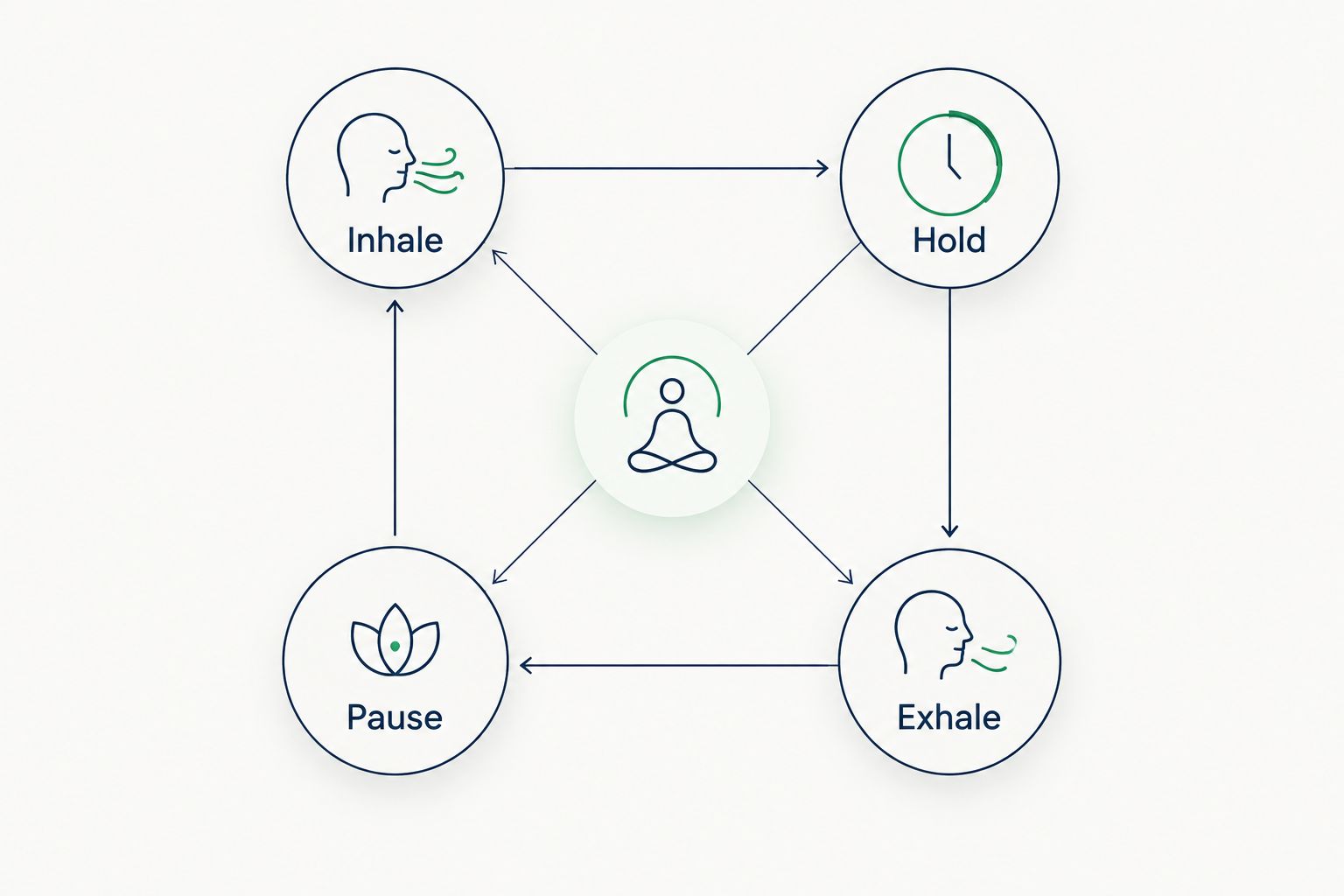
Box breathing follows four equal phases: inhale, hold, exhale, and pause. A common version assigns four counts to each phase, but the counts are a pacing tool rather than a requirement to strain or fill the lungs completely.
Practice the pattern while calm before using it around a predictable trigger. If the holds create air hunger, remove them and keep only a gentle inhale followed by a slower exhale.
Box breathing pros:
- The four-part structure is easy to rehearse
- Equal counts provide a clear focus before a stressful event
- The pattern can be shortened without equipment
Box breathing cons:
- Breath holding can intensify fear of suffocation
- Counting can become frustrating when concentration is impaired
- It is harder to learn for the first time during peak panic
Best for: Planned use before a flight, appointment, presentation, or other known trigger.
Verdict: Practice before the trigger. Skip the holds if they worsen symptoms.
3. 4-7-8 breathing: best before sleep
The 4-7-8 pattern uses a four-count inhale, seven-count hold, and eight-count exhale. Its defining feature is the extended exhale, but the long hold makes it a poor first choice when panic already includes air hunger.
Counts do not have to equal seconds. Moving through them faster preserves the pattern without forcing a long breath retention. Do not compete with the timer or continue until you are dizzy.
4-7-8 breathing pros:
- Gives racing attention one structured task
- Makes the exhale longer than the inhale
- Fits a quiet bedtime routine
4-7-8 breathing cons:
- The seven-count hold can feel threatening during panic
- Panic-specific evidence for this exact ratio is limited
- Strict counting can distract from signs of physical strain
Best for: Bedtime anxiety when you are already physically safe and breathing comfortably.
Verdict: Hold for bedtime. Skip during intense air hunger.
4. Diaphragmatic breathing: best for daily practice
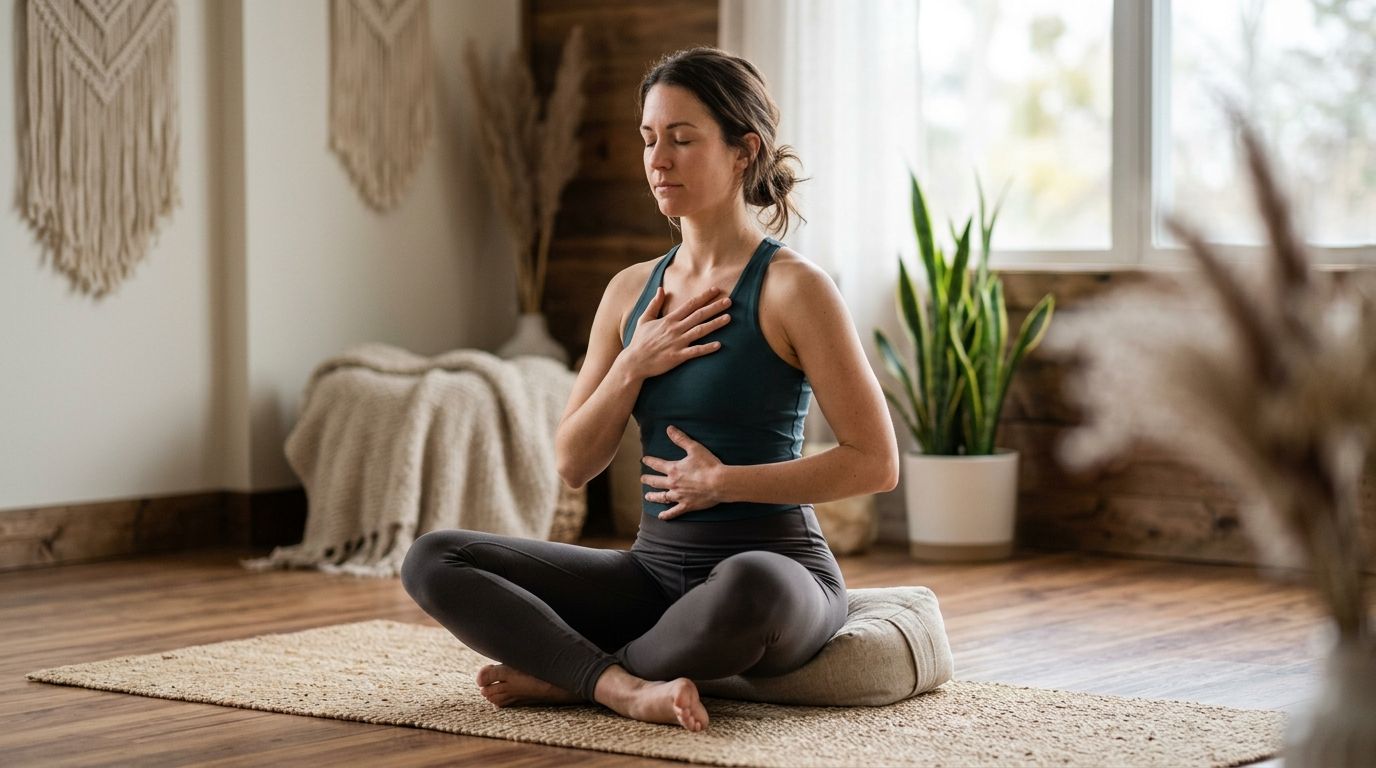
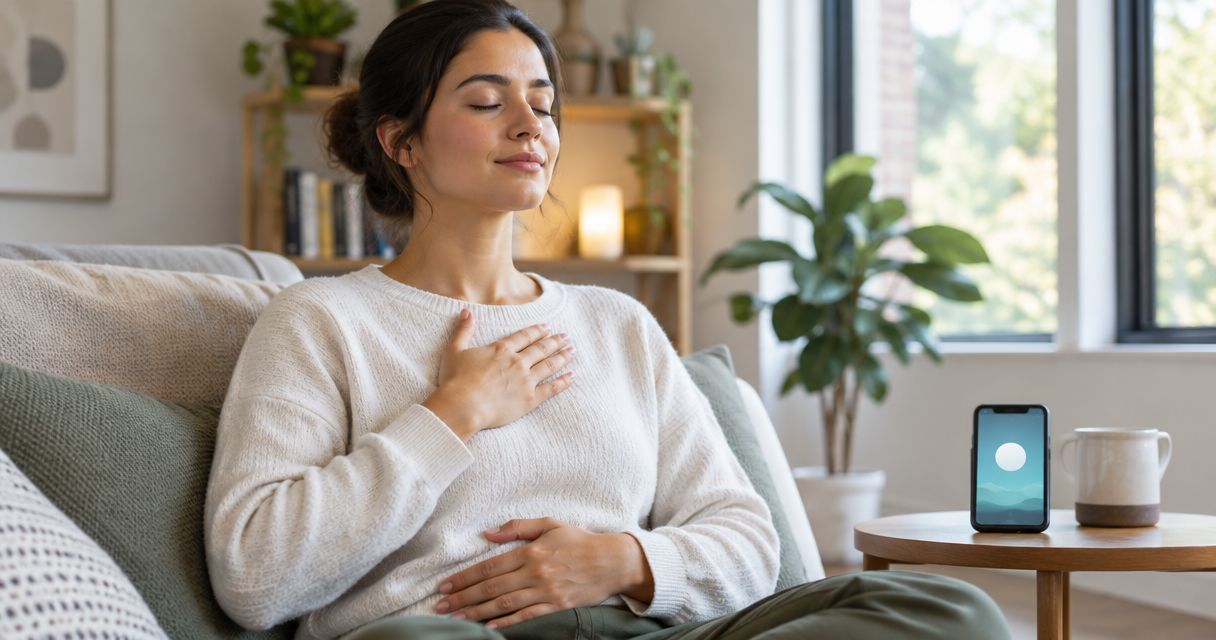
Diaphragmatic breathing encourages the lower ribs and abdomen to move instead of lifting the shoulders with each inhale. Place one hand over the upper chest and the other over the abdomen. Let the lower hand move more while keeping the inhale quiet and unforced.
This is a skill to practice while regulated, not a demand to breathe deeply during distress. In 2026, diaphragmatic breathing remains useful as a baseline exercise because it helps you recognize and soften rapid upper-chest breathing before it escalates.
Diaphragmatic breathing pros:
- Uses no breath hold
- Builds awareness of chest, rib, and abdominal movement
- Can be practiced seated or lying down
- Pairs naturally with somatic tracking
Diaphragmatic breathing cons:
- The movement can be difficult to identify at first
- Focusing on internal sensations can increase distress for some trauma survivors
- It is not an instant solution for the cause of recurring panic
Best for: Regular practice when you want to recognize tension and overbreathing earlier.
Verdict: Build daily, but switch to external grounding if body focus becomes activating.
5. Pursed-lip breathing: best for discreet public use
Pursed-lip breathing uses a comfortable nasal inhale followed by a slow exhale through gently narrowed lips. The resistance naturally extends the exhale without requiring a timer, a large breath, or a prolonged hold.
This technique is established in respiratory rehabilitation, particularly for chronic lung conditions. That does not make it a proven treatment for panic disorder, but its simple mechanics make it a practical option when rapid exhalation is feeding the panic cycle.
Pursed-lip breathing pros:
- Requires no counting
- Can be used quietly in public
- Slows the exhale without breath retention
Pursed-lip breathing cons:
- Panic-specific research is limited
- Forceful blowing can create unnecessary strain
- It does not address intrusive thoughts or trauma cues
Best for: Rising anxiety in a meeting, waiting room, or other setting where you want a subtle technique.
Verdict: Use discreetly and keep the exhale gentle.
6. Coherent breathing: best for paced regulation
Coherent breathing uses an even, slow rhythm, commonly around 5 to 6 breaths per minute. One practical pattern is a gentle inhale for about 5 seconds followed by an easy exhale for about 5 seconds, without pausing between them.
The steady pace is more useful for planned regulation than for peak panic because it requires sustained timing. A visual pacer or quiet tone can reduce the mental effort, but you should remain able to adjust the rhythm when it feels uncomfortable.
Coherent breathing pros:
- Avoids extended breath holding
- Supports a predictable rhythm
- Fits longer somatic-awareness practice
Coherent breathing cons:
- Timing can become another source of pressure
- The standard pace is not comfortable for everyone
- It is difficult to follow while attention is severely disrupted
Best for: Planned nervous-system regulation before or after stressful situations.
Verdict: Pair with broader regulation work rather than treating it as an emergency fix.
How the exercises were ranked
The 2026 ranking prioritizes usability during distress rather than popularity. The physiological sigh ranks first because it removes complex counting and prolonged holds. Box breathing ranks second because it is memorable once rehearsed, but breath retention makes it less suitable for people whose panic centers on suffocation or loss of control.
The lower-ranked exercises are not ineffective. They fill narrower roles. Diaphragmatic and coherent breathing suit regular practice, while pursed-lip breathing offers discretion. The right choice depends on whether you are managing active panic, preparing for a trigger, or building a steadier baseline.
Which breathing exercise should you choose?
Choose the physiological sigh when panic is starting and counting feels impossible. Choose box breathing before a predictable trigger if breath holds remain comfortable. Use 4-7-8 breathing before sleep, diaphragmatic breathing for body awareness, pursed-lip breathing in public, and coherent breathing for paced practice.
The physiological sigh is the best default breathing exercise for rising panic because it is simple, brief, and does not require a prolonged hold. No breathing pattern works for every nervous system, so discomfort is a reason to change techniques rather than force the exercise.
For recurring panic connected to PTSD or complex trauma, breathing can create enough regulation to approach deeper treatment, but it does not process the underlying memory or relational pattern. EMDR with Kelli is best suited to adults in Escondido and San Diego County seeking Somatic EMDR for panic connected to PTSD, complex trauma, anxiety, or relationship issues. That distinction matters in 2026: symptom management and trauma processing serve different purposes.
Explore trauma therapy options
Learn about Somatic EMDR sessions and intensives in Escondido and San Diego County.
When breathing exercises are not enough
Seek support from a licensed clinician when attacks recur, cause avoidance, disrupt sleep or work, or appear alongside flashbacks, compulsions, substance use, or persistent fear of another attack. A therapist can assess whether panic is part of panic disorder, trauma activation, OCD, another mental health condition, a medical issue, or more than one factor.
Breathing exercises should not be used to dismiss symptoms automatically as anxiety. Call 911 for severe or unfamiliar chest pain, fainting, blue lips, major breathing difficulty, or another possible medical emergency. If you are in immediate emotional danger or considering suicide in the United States, call or text 988.
EMDR with Kelli provides Somatic EMDR intensives and weekly sessions for adults, but this guide is educational and cannot diagnose the source of an individual episode. A clinician who knows your health history can determine whether breath-focused practice is appropriate.
FAQ
What is the best breathing exercise for panic attacks?
The physiological sigh is the best starting option for rising panic because it uses a simple double inhale and long exhale without an extended hold. If the double inhale increases dizziness, switch to a quiet inhale and gentle longer exhale.
How do I do a physiological sigh during a panic attack?
Inhale through your nose, take a second shorter nasal inhale, and release one long, relaxed exhale through your mouth. Repeat only while the pattern feels comfortable and stop if it increases breathlessness or dizziness.
Is box breathing good for panic attacks?
Box breathing is most useful when you have practiced it before panic begins. Its breath holds can increase air hunger, so remove the holds if they make the attack feel worse.
Can 4-7-8 breathing stop a panic attack?
4-7-8 breathing can provide structure, but it is not proven to stop every panic attack. The seven-count hold can be difficult during acute panic, making it better suited to calm bedtime practice.
Why does deep breathing sometimes make panic worse?
Large repeated breaths can worsen overbreathing, dizziness, tingling, and feelings of unreality. Keep the inhale quiet and comfortable instead of trying to fill the lungs completely.
Should I breathe into a paper bag during a panic attack?
No, paper-bag breathing is not a safe default because similar symptoms can come from asthma, heart problems, or other medical conditions. Use gentle paced breathing and seek medical help for severe, unfamiliar, or worsening symptoms.
How often should I practice breathing exercises for anxiety?
Practice briefly while calm so the technique is familiar before distress rises. Comfort and consistency matter more than forcing a fixed duration or breath count.
When should I see a therapist about panic attacks?
See a licensed therapist when panic recurs, drives avoidance, interferes with daily life, or appears with trauma memories or compulsions. Medical evaluation is also appropriate when symptoms are new, severe, or different from your established pattern.
One last thing
The most useful instruction in 2026 is not to take the deepest possible breath. It is to reduce effort. A quiet inhale and an easy, longer exhale are less likely to feed the overbreathing cycle than repeated gasps for air.
If internal body focus increases panic, stop monitoring the breath and orient outward instead: name what you see, feel your feet against the floor, and notice stable features of the room. EMDR with Kelli uses body-focused language because nervous-system awareness matters, but regulation should not become another task you have to perform perfectly.