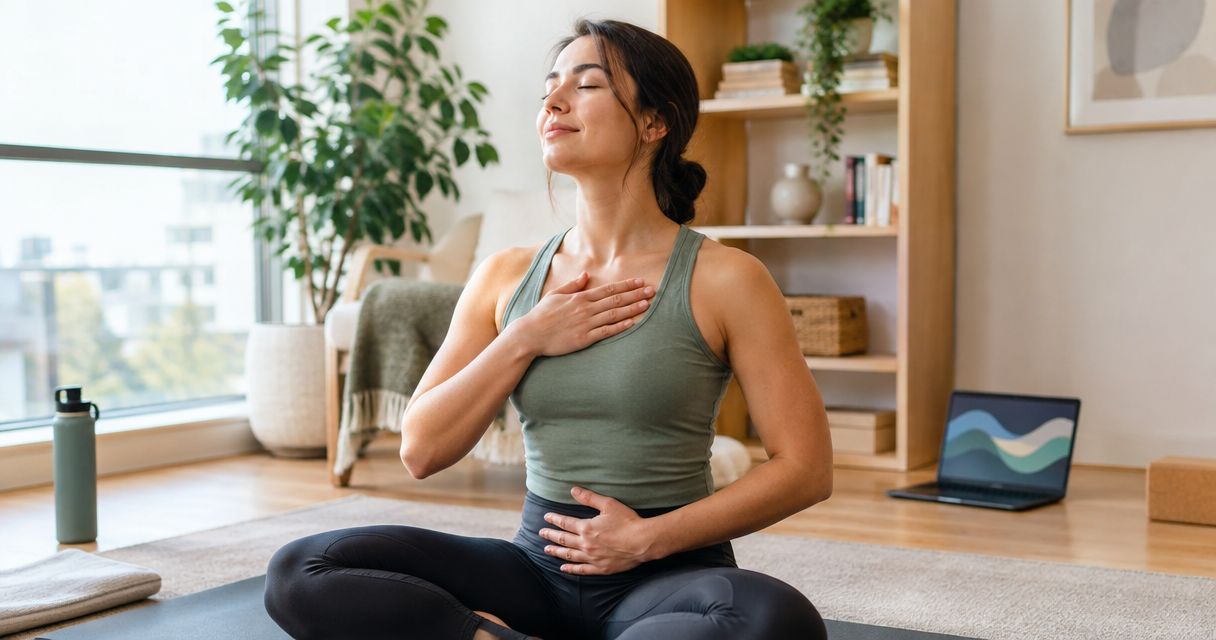
Best overall for complex PTSD: titrated body-based awareness, done with a trauma therapist who can track your nervous system in real time. Best for interrupting flashbacks: five-senses grounding. Best low-risk starting point if you're new to this: paced breath awareness, done in short bursts, not long sits. Standard meditation apps and 20-minute breathwork routines are built for stress, not for a nervous system shaped by repeated trauma — and for complex PTSD, the wrong mindfulness practice can backfire.
- Titrated, therapist-supported body awareness ranks as the best mindfulness practice for complex PTSD in 2026.
- Five-senses grounding (5-4-3-2-1) is the fastest tool for interrupting a flashback in progress.
- Long, eyes-closed sits can increase dissociation in complex PTSD — shorter, eyes-open practices are safer starting points.
- Mindfulness supports trauma processing but does not replace it; pair it with structured therapy like somatic EMDR.
Why this matters
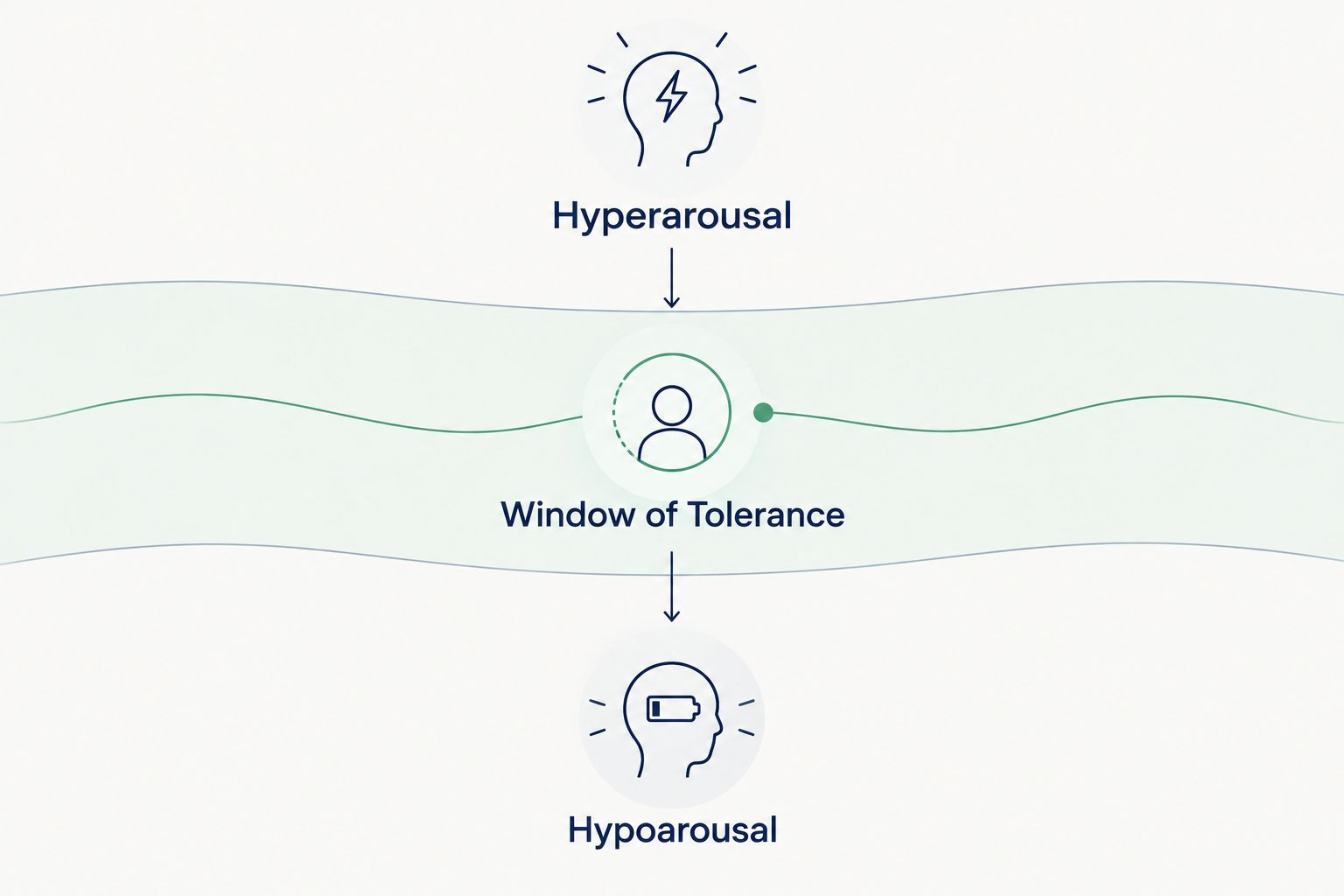
Complex PTSD isn't a single bad memory sitting in the background. It's a nervous system that learned, over repeated exposures, to live in either hyperarousal (anxiety, panic, hypervigilance) or hypoarousal (numbness, shutdown, dissociation). Generic mindfulness advice — "just sit with your feelings" — assumes a nervous system with a wide window of tolerance. Complex trauma narrows that window.
That's why the same practice that helps with everyday stress can flood someone with complex PTSD. A 20-minute body scan without titration can dump someone straight into a trauma memory with no exit ramp. Somatic EMDR therapy works from the opposite direction: small, dosed contact with sensation, tracked by a clinician who can slow down or pause before overwhelm hits.
The practices ranked below are chosen for people with complex PTSD specifically, not general anxiety. Every one gets an honest look at where it helps and where it can backfire.
What makes the best mindfulness practice for complex PTSD
- Titration — small doses of sensation or awareness, not prolonged immersion
- Dissociation-aware — designed with an exit point, not a 20-minute lock-in
- Portable — usable between sessions, without equipment or a quiet room
- Builds interoception gradually — reconnects body sensation without forcing it
- Grounded in nervous-system frameworks — polyvagal theory, window of tolerance, not wellness trends
- Low risk unsupervised — safe to try alone, or clearly flagged as therapist-supported only
At a glance
| Practice | Best for | Standout feature | Key limitation |
|---|---|---|---|
| Somatic tracking with a therapist | People with a dissociation history | Real-time nervous-system monitoring | Requires a session, not solo-friendly |
| Five-senses grounding (5-4-3-2-1) | Interrupting an active flashback | Works in under a minute, anywhere | Doesn't process the underlying trauma |
| Paced breath awareness | Calming spikes between sessions | Low barrier to entry | Long breathwork can trigger hyperventilation-linked panic |
| Resourcing / safe-place awareness | Building a felt sense of safety first | Can be done before harder work starts | Feels abstract until practiced repeatedly |
| Mindful walking (pendulation) | People who can't sit still with sensation | Movement discharges activation | Needs a safe, private space to walk |
| Reflective journaling as mindfulness | Processing between appointments | No timing pressure, private | Writing can retraumatize without pacing |
1. Somatic tracking with a therapist: best for complex trauma with dissociation
Somatic tracking is the practice of noticing body sensation — tightness, temperature, tingling — moment to moment, with a clinician watching for signs of overwhelm and adjusting pace. It's a core piece of somatic EMDR and other body-based trauma modalities, and it's the reason therapist-led sessions outperform solo apps for complex PTSD.
Somatic tracking pros:
- A trained eye catches dissociation before it fully takes over
- Sensation gets processed in small, manageable doses
- Directly supports EMDR techniques for treating complex trauma rather than sitting apart from it
Somatic tracking cons:
- Not something you can fully replicate alone at home
- Requires finding a therapist trained in somatic or body-based methods, which narrows the search
Best for: anyone with a history of dissociative episodes or shutdown responses. Verdict: use with therapist support — this isn't a solo practice, and treating it like one defeats the purpose.
2. Five-senses grounding: best for interrupting a flashback
The 5-4-3-2-1 technique — naming five things you see, four you can touch, three you hear, two you smell, one you taste — pulls attention out of a trauma memory and back into the present room. It's fast, it needs nothing, and it works as a circuit-breaker rather than a processing tool.
Five-senses grounding pros:
- Works in under a minute, in public or private
- No equipment, no prior training required
- Effective specifically during an active flashback, not just general stress
Five-senses grounding cons:
- Doesn't touch the underlying trauma memory — it just interrupts the spiral
- Can feel mechanical the first several times you try it
Best for: the moment a flashback or panic spike hits and you need to get present fast. Verdict: try it — this is the lowest-risk practice on this list, and it's worth having memorized.
3. Paced breath awareness: best low-risk starting point
Slow, paced breathing — not deep, forceful breathwork — helps regulate the vagus nerve without demanding sustained stillness or eyes-closed focus. The distinction matters: extended or forceful breathwork practices have been reported to trigger panic in trauma survivors, while short, paced breath cycles tend to stay inside the window of tolerance.
Paced breath awareness pros:
- Easy to learn without a therapist present
- Can be done in 30 to 60 seconds between tasks
- Pairs well with breathing exercises for panic attacks for acute moments
Paced breath awareness cons:
- Long or forceful breathwork sessions can mimic hyperventilation and spike anxiety instead of easing it
- Some people with complex PTSD associate breath focus itself with past panic episodes
Best for: calming a rising anxiety spike between therapy appointments. Verdict: try it, but keep it short — seconds, not sustained minutes, especially at first.
“If a mindfulness practice increases dissociation instead of calming it, that's information for your therapist, not a personal failure.”
4. Resourcing and safe-place awareness: best for building safety before deeper work
Resourcing means deliberately building a felt sense of safety — recalling a place, person, or memory that reliably calms the body — before attempting anything that touches trauma material directly. It's often taught early in EMDR preparation phases for exactly this reason.
Resourcing pros:
- Creates a return point you can use if a harder practice overwhelms you
- Builds felt safety gradually instead of assuming it exists
Resourcing cons:
- Feels abstract or forced the first several attempts
- Doesn't do much on its own without pairing it with active processing work
Best for: the preparation phase, before starting deeper trauma work of any kind. Verdict: try it as a foundation, not as the whole plan.
5. Mindful walking (pendulation): best for people who can't sit still with sensation
Pendulation is the practice of moving attention back and forth between a activated sensation and a neutral or calm one, often paired with slow walking. For people whose bodies resist stillness, movement gives the nervous system somewhere to discharge activation instead of trapping it.
Mindful walking pros:
- Doesn't require sitting still, which some trauma survivors find intolerable
- Movement itself helps discharge stored activation
Mindful walking cons:
- Needs a private, safe outdoor or indoor space
- Less structured than seated practices, which can make it harder to track progress
Best for: anyone who finds seated mindfulness physically unbearable. Verdict: try it if stillness itself feels threatening.
6. Reflective journaling as mindfulness: best for processing between sessions
Journaling that simply notices sensation, thought, and emotion without narrating a full story functions as mindfulness on paper. It's slower than most practices, which can be an advantage — there's no pressure to keep pace with a guided recording.
Reflective journaling pros:
- No timing pressure; go at your own speed
- Private, no equipment beyond paper
- Pairs directly with journaling prompts for trauma recovery
Reflective journaling cons:
- Writing a full trauma narrative without pacing can retraumatize rather than regulate
- Easy to slip into rumination instead of observation
Best for: processing smaller reactions between scheduled therapy sessions, not for writing out the trauma itself. Verdict: try it with structure — use prompts that ask what you notice, not what happened.
Talk through what's safe to try alone
A trauma therapist can flag which practices fit your nervous system.
How we ranked these
Each practice was weighed against the six criteria above: titration, dissociation-awareness, portability, gradual interoception, grounding in nervous-system frameworks, and unsupervised safety. Somatic tracking ranks highest overall because it satisfies every criterion except portability — the trade-off is having a trained clinician present. Five-senses grounding ranks just below it because it's nearly risk-free but doesn't process anything on its own.
Which mindfulness practice should you choose for complex PTSD?
If you're managing complex PTSD in 2026 and you're not yet working with a trauma therapist, start with five-senses grounding and paced breath awareness — both are low-risk and portable. If you're already in therapy, ask whether somatic tracking fits your treatment plan; it's the practice most likely to produce a meaningful shift rather than temporary relief. Skip long, eyes-closed meditation sits until you know how your body responds to stillness — that single adjustment prevents most of the flooding people report from generic mindfulness advice.
FAQ
What is the best mindfulness practice for complex PTSD?
Titrated, therapist-supported body awareness ranks highest for complex PTSD because it's dosed and monitored in real time. Five-senses grounding is the best solo option for interrupting a flashback in the moment.
Can mindfulness make complex PTSD worse?
Yes, if it isn't titrated. Long, eyes-closed practices can push someone with complex PTSD outside their window of tolerance and increase dissociation instead of calming it.
Is meditation safe for someone with dissociation?
Short, eyes-open practices are generally safer than long, eyes-closed sits for people with a dissociation history. A trauma therapist can help calibrate duration and format.
How is somatic EMDR different from regular mindfulness apps?
Somatic EMDR pairs body awareness with a clinician tracking your nervous system moment to moment, adjusting pace to avoid overwhelm. Standard apps run on a fixed timer regardless of how your body responds.
What is the 5-4-3-2-1 grounding technique?
It's a five-senses exercise: name five things you see, four you touch, three you hear, two you smell, one you taste. It pulls attention out of a flashback and back into the present room.
Does breathwork help with complex PTSD?
Paced, short breath cycles can help regulate the nervous system, but long or forceful breathwork can mimic panic symptoms in trauma survivors. Shorter is safer as a starting point.
Can I practice mindfulness for complex PTSD without a therapist?
Grounding, paced breathing, and structured journaling are reasonable to try alone. Somatic tracking and deeper processing work are safer with a trained trauma therapist present.
One last thing
The detail most people miss: duration matters more than technique. A 90-second window of focused sensation, done with pacing, regulates a nervous system that a 20-minute unpaced sit would flood. If you're trying any practice on this list for the first time in 2026, time it in seconds before you time it in minutes.