
Best overall: confirm that an EMDR intensive fits your needs with the treating therapist. Best for complex trauma: agree on a stabilization plan. Best for a crowded schedule: protect time afterward. These are the best ways to prepare for an EMDR intensive in 2026 because they address treatment fit, safety, and what happens when you leave the session. For adults considering Somatic EMDR in Escondido or San Diego County, EMDR with Kelli is a place to discuss readiness and preparation with a therapist.
- The best ways to prepare for an EMDR intensive start with a treatment-fit conversation, not a list of memories.
- Ask your therapist how Somatic EMDR preparation will address safety, pacing, and nervous-system responses.
- For complex trauma, agree on what to do if you feel overwhelmed or disconnected during the session.
- Leave room afterward for rest and follow-up; do not assume processing ends when the appointment does.
Why preparation matters
An intensive gives trauma processing a different shape from weekly therapy: more work is concentrated into a planned appointment rather than spread across recurring sessions. That difference makes questions about readiness, pacing, and support especially important. Preparation is not a test you pass by recalling every detail or staying calm throughout.
Your first task is to make the plan with the clinician who will provide the intensive. EMDR with Kelli offers Somatic EMDR intensives and weekly sessions for adults dealing with PTSD, complex trauma, anxiety, OCD, and relationship issues. The right preparation depends on your symptoms, current support, and treatment goals; a general checklist cannot determine clinical readiness.
What makes preparation useful in 2026?
Use these criteria to judge any preparation advice before adding it to your calendar:
- Treatment fit: Does a qualified clinician know what you want help with and assess whether an intensive is appropriate?
- Safety plan: Do you know how to signal distress and what happens if processing needs to slow or stop?
- Clear goals: Can you describe the difficulty you want to address without forcing yourself to recount it in detail beforehand?
- Practical space: Can you attend with enough privacy, accessibility, and freedom from competing demands to participate?
- Aftercare: Do you have a realistic plan for the period after the appointment and a way to discuss concerns?
- Care coordination: Does the therapist know about relevant ongoing treatment, particularly when symptoms call for a different approach?
A preparation method ranks higher when it helps you make a clinical decision or communicate a need. It ranks lower when it asks you to push through symptoms alone. No worksheet, breathing exercise, or calendar change can substitute for an assessment by your treating clinician.
Preparation options at a glance
| Preparation step | Best for | What it clarifies | Key limitation |
|---|---|---|---|
| Treatment-fit conversation | Anyone considering an intensive | Whether the format and goals match your needs | Requires a clinician's assessment |
| Stabilization and safety plan | Complex trauma or dissociation concerns | How to respond when distress rises | Does not guarantee a comfortable session |
| Processing-goal notes | People with several possible topics | What to discuss without rehearsing trauma | Can become overwhelming if overdone |
| Practical appointment plan | People balancing work or caregiving | Privacy and competing obligations | Logistics alone cannot establish readiness |
| Aftercare and follow-up plan | People with demanding schedules | Support after the appointment | Needs to match your actual circumstances |
| Coordination with existing care | People managing OCD or other ongoing treatment | How the intensive fits the broader plan | May show another treatment needs priority |
1. Treatment-fit conversation: best preparation for deciding whether to proceed
Start by telling the prospective therapist what brings you to an intensive and what you hope will change. Ask how they assess readiness, how an intensive differs from their weekly sessions, and what would lead them to recommend another format. This conversation comes before detailed self-preparation because the format itself is a clinical decision.
If you have PTSD, complex trauma, anxiety, OCD, or relationship concerns, name the problems in ordinary language. You do not need to arrive with a diagnosis you made yourself or a polished account of every event. Tell the therapist about symptoms that affect your ability to stay present, including feeling detached or becoming overwhelmed, so those concerns can inform the plan.
Treatment-fit conversation pros:
- Puts your current needs ahead of a generic preparation checklist.
- Gives you a place to ask about Somatic EMDR and the clinician's approach to pacing.
- Creates an opportunity to discuss whether weekly sessions or an intensive better fits the work.
Treatment-fit conversation cons:
- It cannot promise how you will respond during processing.
- It depends on open discussion of symptoms you might find difficult to name.
Best for: Everyone considering an intensive in 2026. Verdict: Do this first. If you cannot discuss fit or safety with the treating clinician, hold off on planning the processing itself.
2. Stabilization plan: best preparation for complex trauma
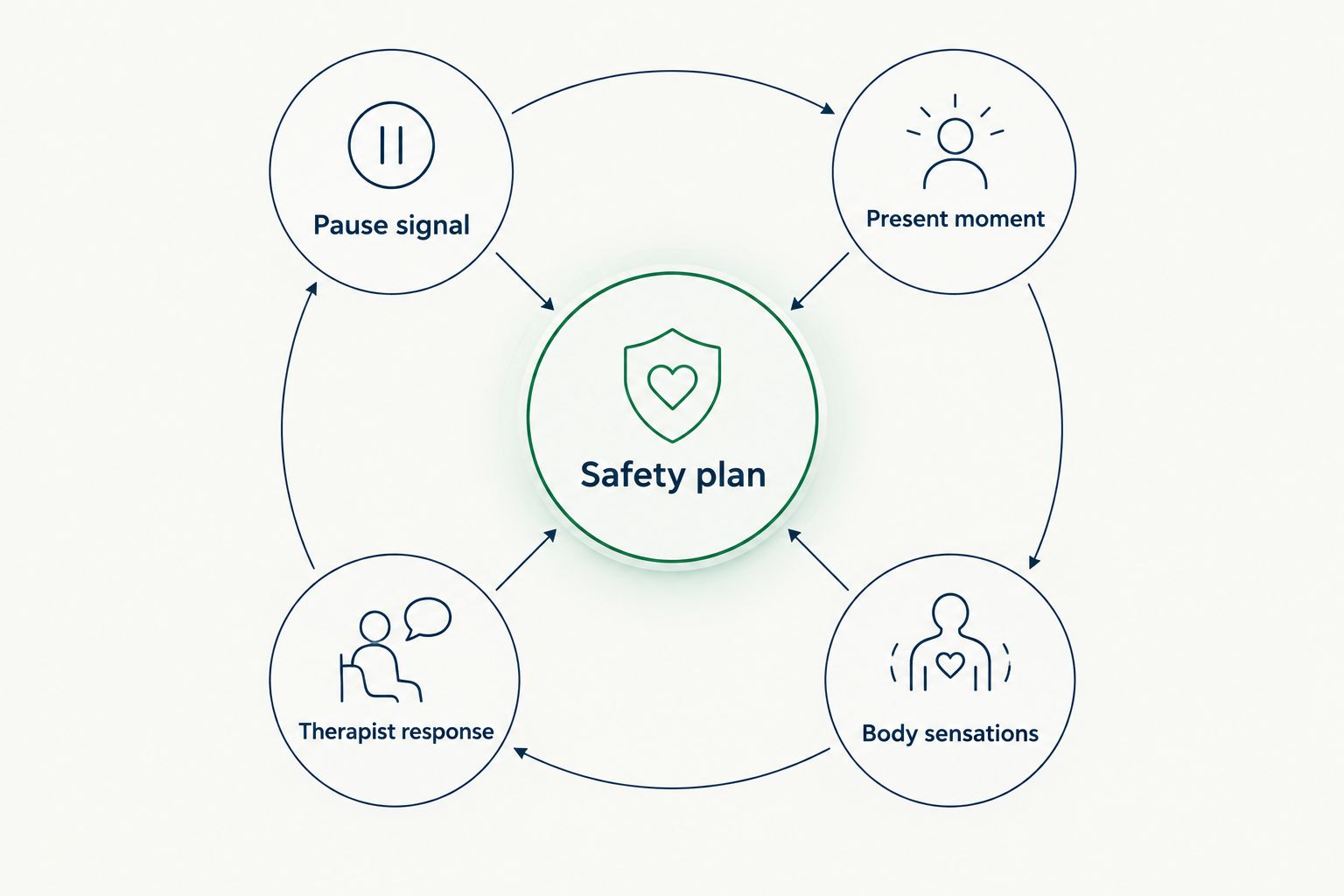
A stabilization plan spells out what you and the therapist will do when distress rises. Ask how you can signal that you need to pause, what helps you reconnect with the present, and how the therapist responds if you feel disconnected. The aim is not to eliminate every uncomfortable feeling; it is to keep you involved in decisions about pacing.
Somatic work pays attention to body sensations as part of the therapeutic process. Notice which forms of attention feel manageable for you and which feel activating. You can discuss those observations without practicing trauma processing on your own. If grounding exercises sometimes make you feel worse, say so rather than assuming they are required preparation.
Stabilization plan pros:
- Makes a pause signal explicit rather than leaving you to improvise.
- Helps the therapist understand how distress or disconnection shows up for you.
- Gives you a way to discuss consent as the session unfolds.
Stabilization plan cons:
- A written plan cannot predict every response.
- A familiar grounding practice is not automatically helpful during every symptom flare.
Best for: People concerned about overwhelm or dissociation, particularly with complex trauma. Verdict: Prioritize it before target selection. In 2026, treat any preparation advice that tells you to push past your limits as a reason to ask the therapist about pacing.
3. Processing-goal notes: best preparation when several memories compete
You can prepare without making a detailed trauma timeline. Write a brief description of the pattern you want help with: an intrusive response, a body sensation that appears with a reminder, or a belief that keeps showing up in relationships. Bring those notes to the therapist and decide together what belongs in the work.
Separate a goal from a target. A goal describes the meaningful shift you want, such as responding differently to a reminder. A target is the material the therapist and client decide to address in treatment. You can know the goal without choosing the target alone, and you do not need to repeatedly expose yourself to painful memories to prove you are ready.
If writing increases distress, stop and tell the therapist. A few plain sentences can communicate enough to begin a conversation. Preparation should make your needs clearer, not turn the days before the appointment into unsupervised processing.
Processing-goal notes pros:
- Keeps the conversation focused on your present concerns.
- Helps distinguish what you want to change from what you think you must disclose.
- Gives you a reference if it is hard to find words in the appointment.
Processing-goal notes cons:
- Detailed journaling can become activating rather than helpful.
- Your first proposed target may not be the one you and the therapist choose.
Best for: People who feel pulled toward several topics. Verdict: Keep the notes brief. In 2026, do not mistake a longer account for better clinical preparation.
4. Practical appointment plan: best preparation for competing demands
Check the appointment details directly with your provider: location or connection method, expected schedule, breaks, and what to do if you need to pause. The inputs here do not establish a standard session length or delivery format, so use the details your therapist gives you rather than another person's account of an intensive.
Consider what will compete for your attention. Work messages, caregiving arrangements, travel, and privacy can affect whether you can take part without repeatedly shifting into other responsibilities. If you need an accommodation or have concerns about the setting, raise them before the appointment. Practical planning supports the clinical work; it does not replace the fit conversation or safety plan.
Ask what the therapist expects you to bring and whether there is anything they want you to avoid doing beforehand. Do not change prescribed medication or another treatment plan because of a general preparation article. Direct those questions to the clinician responsible for that care.
Practical appointment plan pros:
- Clears up expectations specific to your appointment.
- Makes privacy and competing responsibilities visible before they interrupt the session.
- Gives you time to ask for an accommodation.
Practical appointment plan cons:
- A clear calendar does not mean an intensive is clinically appropriate.
- Other people's appointment routines may not apply to yours.
Best for: Adults balancing treatment with work, travel, or caregiving. Verdict: Settle the logistics after confirming clinical fit.
5. Aftercare plan: best preparation for a crowded schedule
Ask the therapist what follow-up they recommend and how to raise concerns after the intensive. Plan a realistic transition back to ordinary responsibilities, including who you can contact for non-clinical support if you want it. You do not have to share the details of your trauma with that person to ask for space or practical help.
Avoid treating the end of the appointment as a deadline for feeling settled. Responses differ, and the therapist providing your care is the person to ask about what to expect in your situation. If you have an urgent safety concern or believe you may harm yourself, seek immediate local emergency or crisis support rather than waiting for a routine follow-up.
An aftercare plan can be simple: know your next obligation, how you will get home if you are attending in person, and how to reach the appropriate support if questions arise. Keep the plan proportionate to your circumstances. Do not copy another client's routine as though it were a treatment instruction.
Aftercare plan pros:
- Protects space to notice how you feel after the appointment.
- Makes the route for follow-up questions clear.
- Helps you identify practical support without requiring a detailed disclosure.
Aftercare plan cons:
- It cannot predict your response to treatment.
- Rest or social support is not a substitute for clinical follow-up when you need it.
Best for: People who would otherwise return straight to demanding tasks. Verdict: Make a workable plan before the appointment.
6. Care coordination: best preparation when other treatment is underway
Tell the intensive therapist about care that bears on your treatment goals. That includes current psychotherapy and concerns such as OCD symptoms that require their own treatment plan. Ask how the proposed intensive fits with the work already underway rather than assuming that every symptom should be addressed through EMDR.
Exposure and response prevention, or ERP, is an established treatment for OCD. If intrusive thoughts and compulsions are central to what you want help with, ask a qualified clinician how OCD treatment fits alongside trauma-focused work. Somatic tracking, EMDR, ERP, and relationship-focused approaches describe different kinds of work; a preparation plan should not blur them into a single technique.
You control what questions you bring and can ask how clinicians would coordinate care where appropriate. The point is to make the treatment plan coherent, not to collect approvals from everyone in your life. A discussion that identifies a better immediate treatment priority is useful preparation, even if it changes your plans for an intensive.
Care coordination pros:
- Keeps existing treatment goals visible.
- Helps you ask precise questions when symptoms overlap.
- Creates space to identify a different clinical priority.
Care coordination cons:
- It takes a conversation, not just a completed intake form.
- It can lead to postponing an intensive you had hoped to schedule.
Best for: People already receiving care or managing prominent OCD symptoms. Verdict: Clarify the broader plan before proceeding.
How these preparation steps are ranked
Treatment fit comes first because none of the other steps can establish whether an intensive is appropriate for you. Safety follows because it gives you a way to participate in decisions during the work. Goals, logistics, aftercare, and coordination then address distinct questions that can otherwise be missed. This is an order for discussion, not a treatment protocol or a promise of results.
Which preparation step should you choose first?
Start with the treatment-fit conversation. If complex trauma or disconnection is part of your experience, make the stabilization plan your next priority. If your main obstacle is a crowded schedule, plan aftercare before the appointment rather than relying on a last-minute decision. The best ways to prepare for an EMDR intensive in 2026 are the steps you and your treating clinician can use to make informed choices.
FAQ
What are the best ways to prepare for an EMDR intensive?
Start with a treatment-fit conversation, then agree on safety, goals, logistics, and aftercare with the treating therapist. Your plan should reflect your symptoms and circumstances rather than a generic checklist.
Should I write down every traumatic memory before an EMDR intensive?
No, you do not need a detailed trauma timeline to prepare. Brief notes about what you want help with can support a conversation, while the therapist helps determine treatment targets.
What if grounding exercises make me feel worse?
Tell your therapist that a grounding exercise feels unhelpful or activating. You can discuss other ways to pause and reconnect without forcing yourself through a technique that increases distress.
Is an EMDR intensive better than weekly sessions?
Neither format is best for everyone. Ask the treating therapist how your symptoms, support, and goals affect the choice between an intensive and weekly sessions.
How should I prepare if I have complex trauma?
Discuss pacing and a stabilization plan with your therapist before processing. Include how you signal a pause and what helps when you feel overwhelmed or disconnected.
Can an EMDR intensive replace ERP for OCD?
Do not assume an EMDR intensive replaces ERP for OCD. ERP is an established OCD treatment; ask a qualified clinician how trauma-focused work fits your broader plan.
What should I arrange after an EMDR intensive?
Clarify follow-up with the therapist and plan a realistic transition back to your responsibilities. Ask whom to contact about treatment concerns, and seek immediate crisis support for an urgent safety concern.
One last thing
The most useful question in 2026 is not how to prepare perfectly. Ask, “What would tell us to slow down or change the plan?” A clear answer makes room for your nervous system's responses and your consent throughout the work.